
Your needs, this model
Does it fit your priorities?
Is the E7 Plus Max 2.0 just a renamed original Max?
No. FlexiSpot's U.S. selector has enabled E7B-Plus-Maxv2 and E7W-Plus-Maxv2 rows, and the linked October manual cover names E7B-PLUS-MAXv2/E7W-PLUS-MAXv2. The original codes link to the separate May manual and its 660-lb rating; do not mix those manuals.
Explore this need in the finder →Does 793 pounds mean the 2.0 has a verified 793-pound static rating?
No. The 2.0 manual reports 793 lb maximum load but does not label it static or dynamic. The fact record keeps static rating unknown, so an essential static-rating threshold cannot be passed using that number.
Explore this need in the finder →Can I get a desktop deeper than 31 inches included with the Max 2.0?
The frame-only compatibility envelope reaches 35.4 inches, but the included laminate choices personally checked for this review reach 31 inches deep. Choose frame-only and a compatible separate top if a 34-inch depth is essential; do not treat that custom-top range as an included tabletop.
Explore this need in the finder →What speed does the Max 2.0 manual actually specify?
The October 2026 manual gives a 0.98–1.57 in/s range and a 1.18 in/s default. That is a manufacturer figure, not a measured comparison in this review; the original manual instead lists 1.5 in/s maximum.
Explore this need in the finder →Does Max 2.0 include a covered cable tray?
Its exact manual lists one cable tray, Velcro and four cable managers. It does not identify the current page's magnetic-fabric wording as a part in this package, so a required magnetic cover remains unconfirmed.
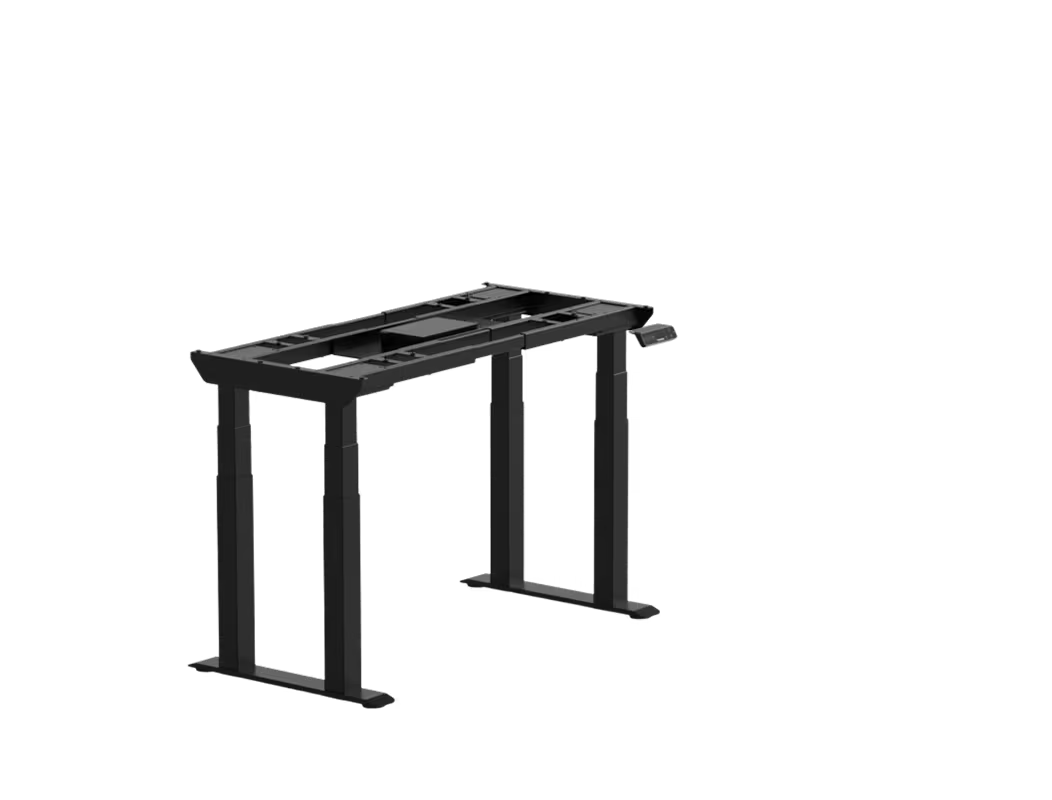
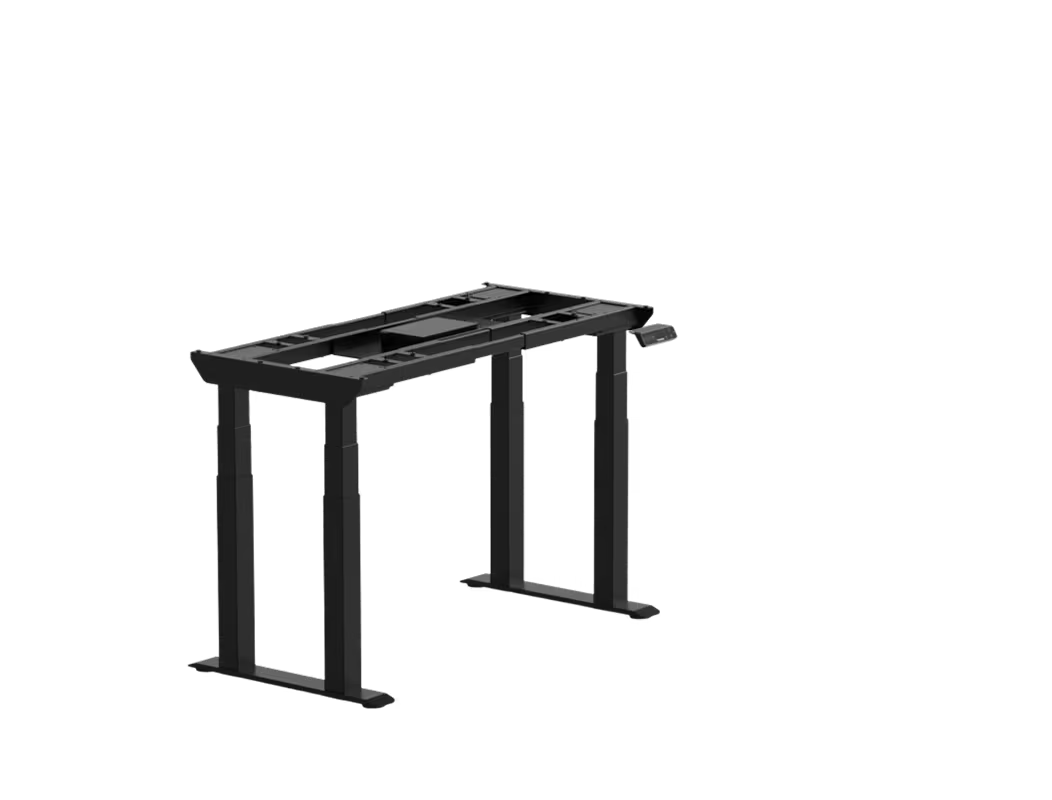
Explore this need in the finder →The FlexiSpot E7 Plus Max 2.0 is a separately selectable revision of the four-leg Max, not just a new finish name. Its U.S. product selector lists black E7B-Plus-Maxv2 and white E7W-Plus-Maxv2 frames, and the linked October 2026 manual has those same item codes on its cover. It retains a 25.8–51.4-inch frame range and a large desktop envelope, but reports a 0.98–1.57-inch-per-second speed range and a 793-pound maximum load. That last figure is not labelled static, so it cannot answer an essential static-load requirement in this guide.
Keep the 2.0 and original manuals separate
The manufacturer item page still shows the original Max's 660-pound static-load specification in its general table. Separately, its selector has enabled rows for E7B-Plus-Maxv2 and E7W-Plus-Maxv2 with a 2.0-specific 793-pound label; the linked manual names the V2 suffix. The original black and white E7B-Plus-Max/E7W-Plus-Max codes link to a different May manual that reports 660 pounds and one maximum speed of 1.5 inches per second. Those are two model/manual pairs within one seller item, not a reason to combine the ratings. Keep a screenshot or saved order description showing the exact code you select.
The Max 2.0 has four lifting columns in the manual and four motors in FlexiSpot's product description. That is more than the two motors on the four-leg E7 Plus, which uses transmission rods to link its columns. The Max's separate motors do not establish independent test results for sway, noise, durability, or performance under your own load. The four-leg arrangement does change where support feet and braces sit, so check space for knees, drawers, footrests, cable trays, a computer mount, and chair travel before deciding that “more legs” automatically means a better fit.
Top dimensions depend on the buying configuration
The 2.0 manual specifies a bare-frame height of 25.8–51.4 inches and adjustment width of 43.3–74.8 inches. Its supported tabletop range is 47.2–94.5 inches long by 24–35.4 inches deep, with top thickness over 0.7 inches. A custom desktop within that envelope is a frame-only plan: the desktop is not included and needs its own compatibility, strength, mounting, and clearance checks.
FlexiSpot also sells the frame with selected desktops. The selector is not one unrestricted range: materials, finishes, and sizes are separate codes, and the page records exclusions for specific top/frame combinations. The included plan reviewed here uses compatible laminate top CBR4830B-D, a 48-by-30-inch, one-inch-thick option. This is why the finder treats a 30-inch included top differently from a 34-inch custom top. If a deep top is essential, frame-only can meet a 34-inch dimension inside the published envelope; it does not mean the page will ship an included 34-inch surface. Verify the exact cart choice instead of transferring the frame's maximum to a bundled desktop.
What does 793 pounds tell you?
The October manual lists 793 pounds (360 kilograms) as “Max. Load Capacity.” Its SKU-specific product selector repeats 793 pounds, but the manual does not call it static or dynamic. The matcher therefore leaves its static-load field unknown. A shopper who requires a manufacturer-published static rating of 650 pounds should not receive this version as if it passed just because 793 is numerically larger. Nor does the number prove that the completed desk can carry 793 pounds of devices: include the tabletop and follow the exact manual.
The figure should not be turned into a head-to-head performance score against the original Max. Its 660-pound page value is explicitly described as maximum static load, while the 2.0 manual says maximum load capacity. Those labels are not demonstrably interchangeable.
Speed, controls, and maintenance limits
The 2.0 manual gives a speed range of 0.98–1.57 inches per second and a 1.18-inch-per-second default. The original manual lists a maximum of 1.5 inches per second. These are manufacturer values, not motion measurements from a comparative test; the range and default are the more useful details when you are reading the 2.0 manual.
The manual identifies four saved positions, one cable tray, a Velcro strip, and four cable managers. It does not establish that the product page's magnetic-fabric cable language is included in this exact manual package, so a mandatory covered tray remains unconfirmed. Test slack at maximum height for every power, monitor, and USB lead. The operating instructions also specify two minutes of movement followed by 18 minutes of rest. Four motors do not make continuous cycling a supported use. FlexiSpot asks for at least two people during assembly; allow room to stage the large frame and avoid twisting it as it is raised.
The page's warranty table lists 15 years for frame/mechanism and electronics categories, but desktop coverage differs by material. Check the selected surface's exact terms, along with delivery, returns, and the final SKU, before ordering. No price or retail availability is treated as fixed here.
Who should choose this version?
The Max 2.0 makes the most sense when you specifically want a four-motor, four-leg frame, the 51.4-inch upper bare-frame range, and a separate manual whose speed range matters to your comparison. It is less compelling if your workspace cannot use the four-leg footprint, if a low starting height is essential, or if the included 48-by-30-inch top is too small for your layout. The much larger top dimensions are frame-only compatibility limits, not bundled-size promises.
If a confirmed static rating is important, compare the original Max's explicitly worded page figure, but don't treat its 660-pound specification as independent payload testing. If you want four legs with two motors, the E7 Plus is a distinct design. The original E7 Plus Max review explains its matching May manual; the E7 and E7 Pro are two-leg alternatives. Choose by exact manual, tabletop plan, height, and clear floor space rather than by a higher-looking load label.
Key details at a glance
| Minimum frame height without desktop | 25.8 in |
|---|---|
| Maximum frame height without desktop | 51.4 in |
| Leg count | 4 |
| Motor count | 4 |
| Narrowest frame width | 43.3 in |
| Widest frame width | 74.8 in |
| Minimum supported desktop width | 47.2 in |
| Maximum supported desktop width | 94.5 in |
| Minimum supported desktop depth | 24 in |
| Maximum supported desktop depth | 35.4 in |
| Programmable height presets | 4 |
| Cable tray included | Yes |
| Published frame and mechanism warranty | 15 years |
| Frame layout | four-leg rectangular |
Use the exact model’s instructions for operating limits, supplied equipment and version differences.
Paper, software and setup details
Desktop and configuration note
The current page offers a frame-only selection and selected desktop choices. General frame-only compatibility is 47.2–94.5 in long by 24–35.4 in deep, over 0.7 in thick. For this fact record, the included-top plan covers only the individually inspected compatible black laminate 48 × 30 in SKU CBR4830B-D, listed as 1 in thick. Other material, finish and size SKU rows remain in the source selector and must be checked against its frame exclusions rather than inferred from the broad frame-only limits.
Load-rating interpretation
The 2.0 manual and its SKU-specific page label report 793 lb maximum load (360 kg). The manual does not label that number static or dynamic, so the static-rating matcher remains null and an essential static-load request cannot use 793 lb. Do not merge this 2.0 figure with the original revision's page-listed 660-lb static rating or treat either as an independently tested equipment payload after top mass.
Operating and setup note
The exact October 2026 manual cover identifies E7B-PLUS-MAXv2/E7W-PLUS-MAXv2; the matching page rows show enabled black/white SKU options. It specifies four columns, 0.98–1.57 in/s movement with a 1.18 in/s default, four presets, one cable tray, one Velcro strip and four cable managers. Assembly calls for two or more people. Respect the 2-minute use/18-minute rest cycle. Four support feet and associated beams need clearance around knees, drawers and chair paths. The manual parts list does not establish a magnetic fabric cover as included.
Sources for this assessment
Choose a desk around your real setup.
Start with whether you need a complete desk or a converter for an existing fixed desk, then choose the support layout and surface package. Add exact height, top and cable constraints only when they matter.