
Your needs, this model
Does it fit your priorities?
Do you specifically need the current selector’s black Heavy Duty Casters?
This plan selects option 5253, which the current UPLIFT page calls Heavy Duty Casters - Black and says raises the desk 4.7 inches. The label does not prove floor suitability, noise, or a different frame load rating.
Explore this need in the finder →Is a 34.5-inch lowest work-surface setting acceptable?
The one-inch-top FRM240 finished minimum of 29.75 inches plus the selected caster rise of 4.7 inches yields 34.45 inches, derived rather than measured. An answer below that value excludes this plan.
Explore this need in the finder →Does the bare frame need to reach at least 49.7 inches?
The FRM240 specification’s bare-frame maximum is 45 inches; adding the page-listed caster rise of 4.7 inches yields a derived 49.7-inch maximum. A greater essential setting is not supported.
Explore this need in the finder →This review assesses one selected configuration of UPLIFT’s Pneumatic Standing Desk: a 48 × 30 × 1-inch Walnut Laminate top, no grommet holes, black FRM240 frame, and black Heavy Duty Casters. The U.S. product page offers these as separate selectors; it does not verify a single retail SKU or ASIN for the combined choices. The page’s checkout family label, the UPLIFT comparison chart’s UPL240 code, and the frame document’s FRM240 designation refer to different identity layers, not proof of a standalone retail model number.
The 4.7-inch rise is the defining tradeoff
UPLIFT labels this accessory option “Heavy Duty Casters - Black” and says it raises the desk 4.7 inches. FRM240 instructions and specifications describe the underlying manual-paddle pneumatic frame; its published bare-frame range is 28.75 to 45 inches. With a one-inch top, the published finished-surface range is 29.75 to 46 inches. Adding the selected 4.7-inch rise produces derived bare-frame endpoints of 33.45 to 49.7 inches and a derived work-surface range of 34.45 to 50.7 inches. These are arithmetic sums of manufacturer statements, not measurements of an assembled desk.
That starting point is a consequential fit check. If your seated setup needs a surface below 34.45 inches, the heavy caster plan cannot meet it on the documented numbers. A no-caster configuration or the page’s lower-rise standard or Soft Roll choice may suit better, but each is a distinct selection that changes the completed height. If you must reach a bare-frame setting above 49.7 inches, this exact arrangement also falls short of the documented ceiling. Measure your actual keyboard and worktop needs before treating a frame endpoint as a usable surface height.
“Heavy Duty” is part of the caster option’s name, not evidence that the frame carries more load than its published rating. The selector does not state a caster capacity, floor material compatibility, noise level, threshold ability or a braking test. Its product image depicts one black caster with a metal bracket and pedal-like assembly; that picture cannot establish how the set performs under a loaded desk or on your floor. Ask UPLIFT for the caster’s rated load and floor guidance if either is essential.
A compact rectangle with an uncut surface
The selected top is fixed at 48 inches wide by 30 inches deep. That front-to-back depth may give you more separation between a monitor and keyboard than a 24-inch top, but a 30-inch desktop can also consume room depth. Check the wall, chair travel and cable space behind the desk. The frame footprint is listed at 47.5 inches wide by 25.6 inches deep, not the same outline as the top.
“Walnut Laminate 1 inch” describes a laminate appearance, not a solid walnut slab. The selected grommet option explicitly says “No Grommet Holes in Desktop.” That leaves the top without the chosen pass-through openings; it does not include a power panel or make cable routing automatic. Choose a different explicitly listed bundle if an opening, cover, USB port or outlet is essential, and make sure that choice coexists with your selected surface.
Manual adjustment and published load limits
This frame uses dual synchronized pneumatic pistons and a manual control paddle. It does not need a mains outlet to raise or lower the desk, and it does not offer the electric keypad presets that some motorized frames provide. That may suit a workspace where power-free adjustment matters; it is a poor match if you want saved heights or a push-button lift. The frame’s 55-pound dynamic and 220-pound static figures both include the desktop in the FRM240 sheet. The comparison chart describes 55 pounds as lifting capacity. Those are different conditions, and neither is a remaining equipment payload after this exact desktop is installed. The page does not supply this selected top’s weight, so I do not invent a residual load figure.
UPLIFT’s FRM240 instructions recommend two-person assembly, require at least one inch of clearance around moving parts, and describe setup of the manual paddle cable before operation. Keep slack where the instructions call for it and use the desk indoors in dry conditions. With tall casters, also plan for a higher starting surface and any furniture, shelf or screen that may constrain the upper travel. A photo of the option accessory is not a substitute for checking the assembled clearance.
Who should choose it?
This configuration is worth considering when you want the fixed 48 × 30 Walnut Laminate worktop, a desk that adjusts without mains power, no tabletop grommet cutouts, and the manufacturer-listed Heavy Duty caster option’s 4.7-inch rise. It is not the safer default when you need a low seated surface, verified heavy-load rolling, quiet movement, floor-specific protection, or powered presets. The smaller 1.5-inch standard caster and 2.5-inch Soft Roll choice produce lower derived endpoint ranges on the same one-inch top; the no-caster 48 × 24 reviewed plan is a different size as well as a different mobility setup. For preset memory, compare a documented electric UPLIFT frame instead, checking its top size and installed height separately.
This is a source-based assessment rather than an ownership or laboratory test. The manufacturer’s desk gallery identifies a 48 × 30 Walnut Laminate Pneumatic desk with casters but does not show enough detail to identify which caster choice is installed. A separate selector thumbnail for option 5253 depicts the selected black caster component. The two images support the desk-family and option-component identities together, but neither establishes field performance or package contents beyond the configured choices.
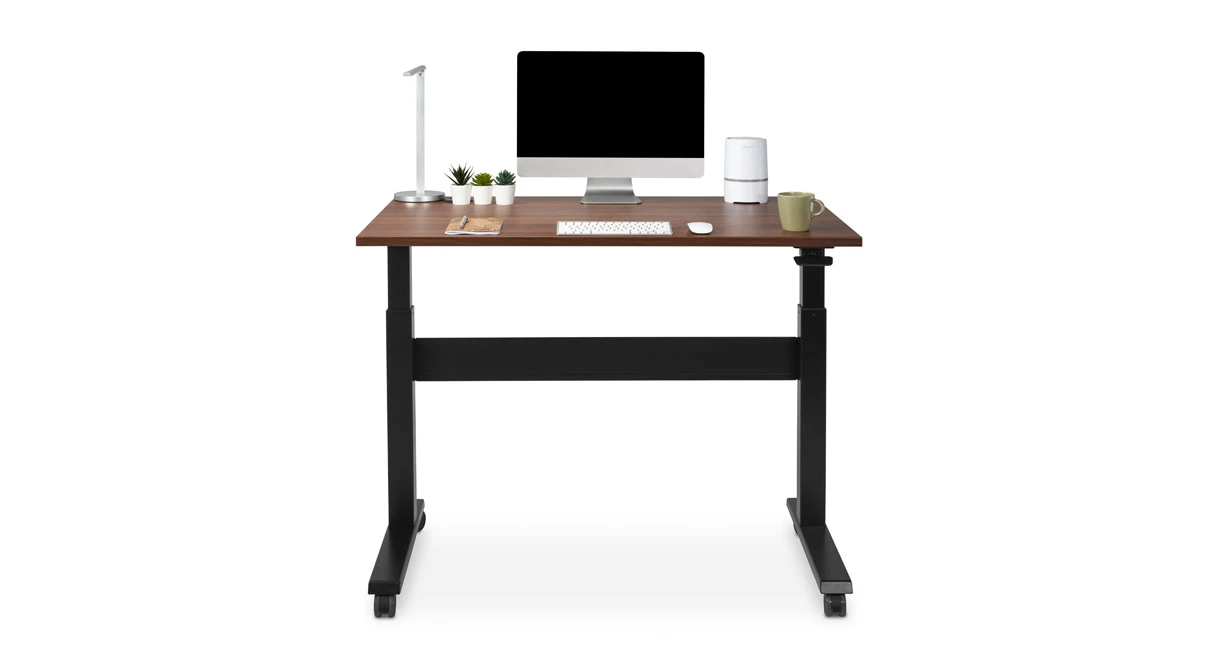
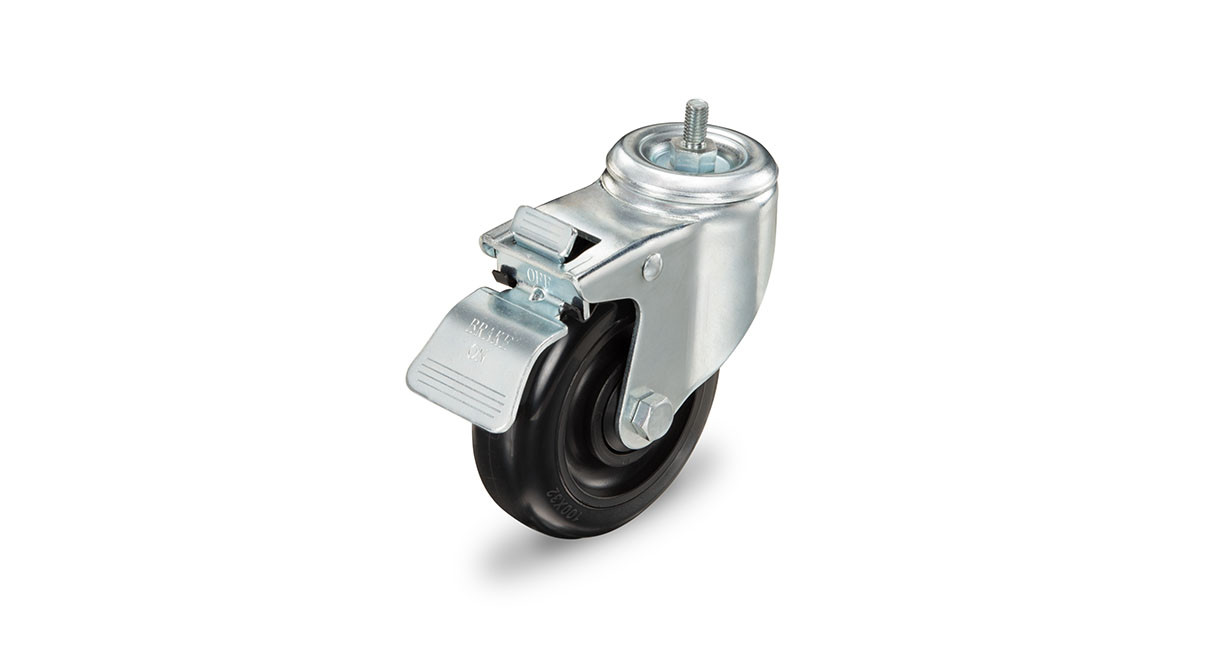
Manufacturer references: UPLIFT Pneumatic Standing Desk option selectors, FRM240 specifications, FRM240 instructions, and UPLIFT desk comparison chart.
Key details at a glance
| Minimum frame height without desktop | 33.45 in |
|---|---|
| Maximum frame height without desktop | 49.7 in |
| Published maximum static-load rating | 220 lb |
| Published maximum lifting-load rating | 55 lb |
| Leg count | 2 |
| Motor count | 0 |
| Narrowest frame width | 47.5 in |
| Widest frame width | 47.5 in |
| Minimum supported desktop width | 30 in |
| Maximum supported desktop width | 30 in |
| Minimum supported desktop depth | 30 in |
| Maximum supported desktop depth | 30 in |
| Published frame and mechanism warranty | 15 years |
| Frame layout | rectangular |
| Minimum working-surface height with desktop | 34.45 in |
| Maximum working-surface height with desktop | 50.7 in |
| Wireless charging built into desktop | No |
| Built-in AC/USB power panel | No |
| Built-in AC outlets | 0 |
| Documented desktop material | laminate |
Use the exact model’s instructions for operating limits, supplied equipment and version differences.
Paper, software and setup details
Desktop and configuration note
The selected U.S. option set is a fixed included 48 × 30 × 1-inch Walnut Laminate top (option value 34619), no desktop grommet holes (option 13221), black FRM240 pneumatic frame (14687), and standard black casters (5251). UPLIFT uses LIS-PNEUMATIC-DESK in its category listing and UPL240 in its comparison chart; no separate retail SKU or ASIN for this combination is asserted. Other top materials/sizes and grommet/caster branches remain unresolved.
Load-rating interpretation
The FRM240 sheet reports 55 lb dynamic and 220 lb static load including the desktop. The chart calls 55 lb the lifting capacity. Neither establishes a remaining payload after this selected Walnut Laminate desktop is installed.
Operating and setup note
Manual control paddle and synchronized pneumatic pistons require no mains outlet. The current selector names Heavy Duty Casters - Black and states they raise the desk 4.7 inches. That label does not establish a load rating for the caster, floor suitability, quietness, or threshold performance. The source image shows the caster component only.
Sources for this assessment
- UPLIFT Pneumatic Standing Desk linked U.S. option page
- UPLIFT Pneumatic Standing Desk manufacturer product page
- UPLIFT Pneumatic Standing Desk FRM240 specifications, one page
- UPLIFT Pneumatic Standing Desk FRM240 instructions, AI-FRM240-1.1, 12 pages
- UPLIFT Standing Desk Comparison Chart, rev. 6.9.21, UPL240 column
- UPLIFT gallery rendering labeled 48 × 30 Walnut Laminate Pneumatic Standing Desk with casters
- UPLIFT Heavy Duty Casters option image


Choose a desk around your real setup.
Start with whether you need a complete desk or a converter for an existing fixed desk, then choose the support layout and surface package. Add exact height, top and cable constraints only when they matter.