
Your needs, this model
Does it fit your priorities?
Is the E7Q a two-motor desk with four legs, or a four-motor model?
FlexiSpot's E7Q specification page says four motors, and the directly linked E7QB-MAX manual lists four lifting columns. That differs from the two-motor E7 Plus despite both using four-leg frames.
Explore this need in the finder →Can I order a 35-inch-deep desktop with this E7Q?
The manufacturer page lists BambooD tops at 71 × 35 and 79 × 35 inches, and both sizes fit the linked manual's 70.9–94.5 inch long-edge and 31.5/35.4 inch other-edge dimensions. The exact cart SKU code was not exposed in the archived page, so recheck the selected material and size before buying.
Explore this need in the finder →Could the manual’s 661-pound load term satisfy a 665-pound static-rating requirement?
No. The product page separately calls 660 pounds the maximum static load; the manual calls 661 pounds maximum load capacity without saying static or dynamic. Do not count the manual number as a verified static or dynamic match.
Explore this need in the finder →Will the E7Q definitely raise a top to 51.5 inches?
That is not established: the product page says 51.6 inches maximum but the directly linked manual says 51.4. The matcher leaves the upper endpoint unknown, so a strict 51.5-inch requirement should not pass.
Explore this need in the finder →Can I select a rigid cable tray for this exact package?
The linked manual lists a cable-management net, not a dedicated rigid tray. Treat a tray or covered-tray requirement as unconfirmed and plan the cable route around the four supporting columns and beams.
Explore this need in the finder →Is the desk sold as a frame without a desktop?
The current product page describes multiple desktop materials, but the archived page does not establish a frame-only SKU. A compatible desktop range is not proof that frame-only is a purchasable configuration, so do not use this review to satisfy a frame-only requirement without checking the seller's current selection.
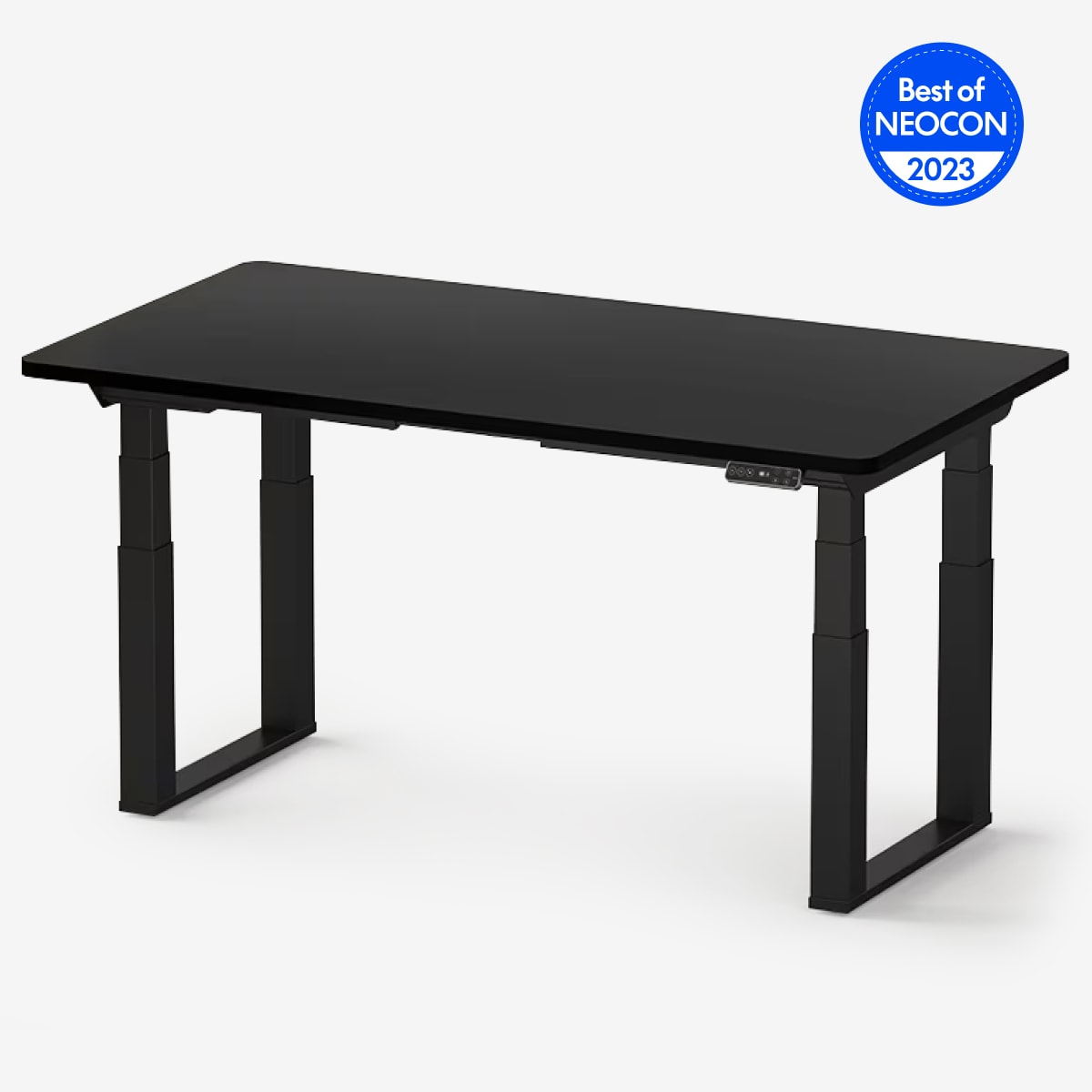
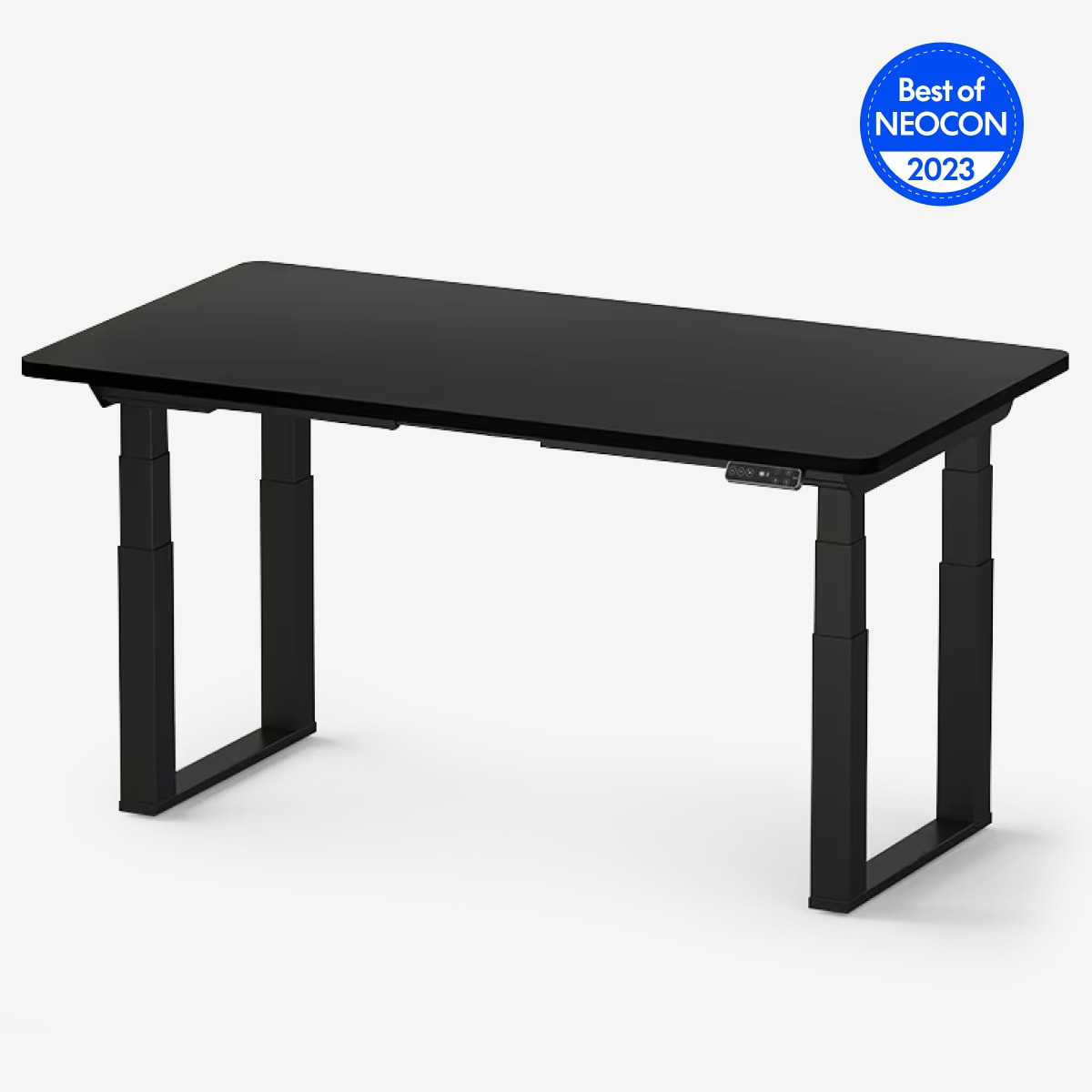
Explore this need in the finder →The FlexiSpot Odin E7Q is a four-motor, four-column desk for a workspace with room for a deep top and a large base. Its key difference from the four-leg E7 Plus is the drive layout: FlexiSpot lists four motors for E7Q and two for E7 Plus. That does not prove a performance advantage. The page and manual disagree on upper height and use different load wording, so strict needs must stay within the facts they share.
Identify the exact desk and manual
The U.S. page title is “FlexiSpot Odin 4-Leg standing desk E7Q”; it also displays an “E7Q Pro” label. Its E7Q manual link opens a cover marked item E7QB-MAX, and its specification illustration uses ET223Q-MAX. Because the exact page links that manual, this review treats it as the Odin E7Q while preserving both item labels. Match the carton paperwork to the linked manual; do not substitute an E7 Plus or E7 Plus Max document.
Four lifting columns need a generous footprint
FlexiSpot calls E7Q a four-motor desk; the linked manual lists four lifting columns, two support beams, two side brackets and two feet. Its rectangular base expands 43.3–74.8 inches wide. That layout can suit a long worktop or shared project surface, but uses more under-desk area than a standard two-leg frame. Measure chair travel, drawers, knees, computer mounts and nearby furniture around the feet and beams.
Height needs the same careful check. Both sources agree on a 25.8-inch minimum before the desktop. The product page lists a 51.6-inch maximum; the manual gives 51.4 inches. Since those values conflict, do not depend on E7Q meeting a strict 51.5-inch bare-frame requirement. The upper setting for a completed desk also includes the desktop thickness. Set a working-height target from your actual chair and body position, then compare the total surface height rather than the column number alone.
Pick the top as part of the plan
The manual supports a long edge of 70.9–94.5 inches and lists the other edge as 31.5 or 35.4 inches; the page says desktop depth 30–35.4 inches. Since the lower limits disagree, do not assume a 30-inch top is manual-compatible. The page lists BambooD tops at 71 × 35 and 79 × 35 inches, each 1.1 inches thick. Both geometries fit the linked manual; these are the only included plans represented here. The archive does not expose their sellable SKU codes, so confirm the selected size in the actual cart.
The page also displays Chipboard, other Bamboo finishes, SolidWoodTexture and Butcher Block Rubberwood. Its material panel is not a complete compatibility table: some options are shorter than the manual's 70.9-inch minimum, and several 30-inch-deep choices sit below its 31.5-inch entry. I do not treat those as confirmed order configurations. The page also does not confirm a frame-only purchase plan; verify the cart, manual and mounting layout if you need a custom top.
Do not turn the load number into payload
The U.S. page labels 660 pounds “Max. Static Load.” The manual instead says 661 pounds “Max. Load Capacity,” and its troubleshooting table warns against loads above that number. The manual does not call 661 pounds dynamic, and neither claim is a payload test for desktop plus equipment. Keep the figures separate; if a particular payload is essential, ask FlexiSpot for the exact order's rating basis rather than using the larger value as a safety allowance.
Assembly, controls and ownership
Plan for help: the manual recommends two or more people, a carpeted assembly area and a Phillips screwdriver or drill. Four columns, two beams, a top and multiple connections are more involved than attaching a small two-leg base. The parts list names a cable-management net, not a rigid tray. Leave slack for full travel and keep leads clear of the beams and columns.
The linked manual describes four saved positions, a child lock, collision-prevention sensitivity settings and a USB charging output on the LED keypad. It also gives a two-minutes-on/eighteen-minutes-off duty cycle. That is a maintenance limit, not a suggestion to make frequent short adjustments continuously. FlexiSpot's current warranty panel lists 15 years for frame, motor, mechanisms and electronics; desktop terms differ by material, with the listed chipboard and textured-solidwood categories carrying shorter terms than solid wood. Confirm the wording for the top you actually choose.
Who should compare another frame?
Compare E7 Plus if four legs matter but four motors do not; its included plan here is a 48 × 30-inch laminate top. The original E7 Plus Max also has four motors and a broader frame-only envelope, while its verified included top is 48 × 30 inches. E7Q is the more plausible fit when a listed 71 × 35 or 79 × 35 BambooD top is useful and its long base fits the room. Its evidence does not settle a strict upper-height, frame-only, 30-inch-top, payload or rigid-tray requirement.
This is a source-based assessment, not a hands-on stability or load test. Read the FlexiSpot U.S. E7Q product page and the manual linked there with the selected desktop details before ordering.
Key details at a glance
| Minimum frame height without desktop | 25.8 in |
|---|---|
| Published maximum static-load rating | 660 lb |
| Leg count | 4 |
| Motor count | 4 |
| Narrowest frame width | 43.3 in |
| Widest frame width | 74.8 in |
| Minimum supported desktop width | 70.9 in |
| Maximum supported desktop width | 94.5 in |
| Maximum supported desktop depth | 35.4 in |
| Programmable height presets | 4 |
| Published frame and mechanism warranty | 15 years |
| Frame layout | four-leg rectangular |
Use the exact model’s instructions for operating limits, supplied equipment and version differences.
Paper, software and setup details
Desktop and configuration note
The manual supports a 70.9–94.5 in long edge and lists the other edge as 31.5 or 35.4 in; the page separately says applicable depth 30–35.4 in. The lower-depth disagreement is unresolved. The page's BambooD display specifies rectangular 71 × 35 and 79 × 35 in tops, 1.1 in thick; both geometries fall within the manual's long/deep ranges and are the only included-top plans represented here. Their actual sellable SKU codes are not exposed in the archived page. Other page-listed material/size options have not been verified as exact current cart/frame combinations. The reviewed page does not confirm frame-only purchase availability.
Load-rating interpretation
The current U.S. page labels 660 lb as Max. Static Load; the linked manual instead says 661 lb Max. Load Capacity. The manual does not label its value static or dynamic. Preserve the claims separately; 661 is not a verified dynamic rating, neither figure is an independent payload test, and the desktop plus equipment still matter.
Operating and setup note
Page specifies four motors; the direct manual lists four lifting columns, two supporting beams, two side brackets and two feet. The exact manual parts list includes a cable-management net, not a named rigid tray. It calls for at least two people, 2 minutes of operation followed by 18 minutes of rest, and brings a Phillips screwdriver or pistol drill. Premium keypad/manual describe four memory positions, child lock, USB charging and collision-prevention sensitivity settings.
Sources for this assessment
Choose a desk around your real setup.
Start with whether you need a complete desk or a converter for an existing fixed desk, then choose the support layout and surface package. Add exact height, top and cable constraints only when they matter.