
Your needs, this model
Does it fit your priorities?
Which exact Tria top and leg-color pair should the desk match?
This assessment covers White top with White legs. The specification sheet identifies the desktop as laminated MDF; the White name is a finish, not a material claim.
Explore this need in the finder →What minimum actual top length and depth must the same complete desk provide?
The largest White / White plan measures 70.9 × 29.5 inches; the middle is 58 × 27 and the smallest is 47.2 × 27 inches. A 71 × 30 nominal label is rounded.
Explore this need in the finder →What is the highest acceptable minimum finished desktop height?
Branch gives every Tria size a 25.5-inch lower completed-surface endpoint. A lower required limit is not confirmed for this desk.
Explore this need in the finder →Is a laminated-MDF surface acceptable, or must it be solid wood?
Branch’s spec sheet identifies the top as laminated MDF. This exact finish is suitable only if that material meets the shopper’s requirement.
Explore this need in the finder →Branch Tria Standing Desk · configuration review
Three exact desktop sizes share one electric two-leg frame and the same published height range. The finish is the main distinction here; the desk is not a solid-surface white or a different lifting system.
Choose the size by its actual top, not the rounded selector label
Branch sells this finish as nominal 48 × 27, 58 × 27 and 71 × 30 inch configurations. Its specification sheet gives the actual work surfaces as 47.2 × 27, 58 × 27 and 70.9 × 29.5 inches. That fraction matters if your room plan has a strict minimum: the largest desk is just under 71 inches long and 30 inches deep. Measure the clear space around the desk, including door swing and the chair's path, before treating the marketing size as a fit guarantee.
The 47.2-inch top is the compact choice for a laptop-and-one-display arrangement or a narrow room, provided your equipment fits the actual work area. The 58-inch model gives more side-by-side room without the full footprint of the largest option. The 70.9-inch model is the one to investigate when you need a broad work surface, but the 29.5-inch depth still falls short of a hard 30-inch requirement. In all three cases, the exact complete-desk SKU includes the selected desktop and powered frame; this is not a frame-only offer.
White is a finish choice, not a material upgrade
The manufacturer calls this top White and pairs it with White legs. The product specification identifies the desktop construction as laminated MDF, so do not read the color name as a claim of solid white wood, stone, or another special surface. This distinction matters if a durable solid-wood top is an essential rather than a preference: the Tria White/White configuration does not meet that requirement on the published evidence. If a light, coordinated appearance is the goal, this pairing is a straightforward alternative to Natural Oak/White, Woodgrain/White or the darker Tria options. Those names describe finish differences on the same desk family, not separate top materials.
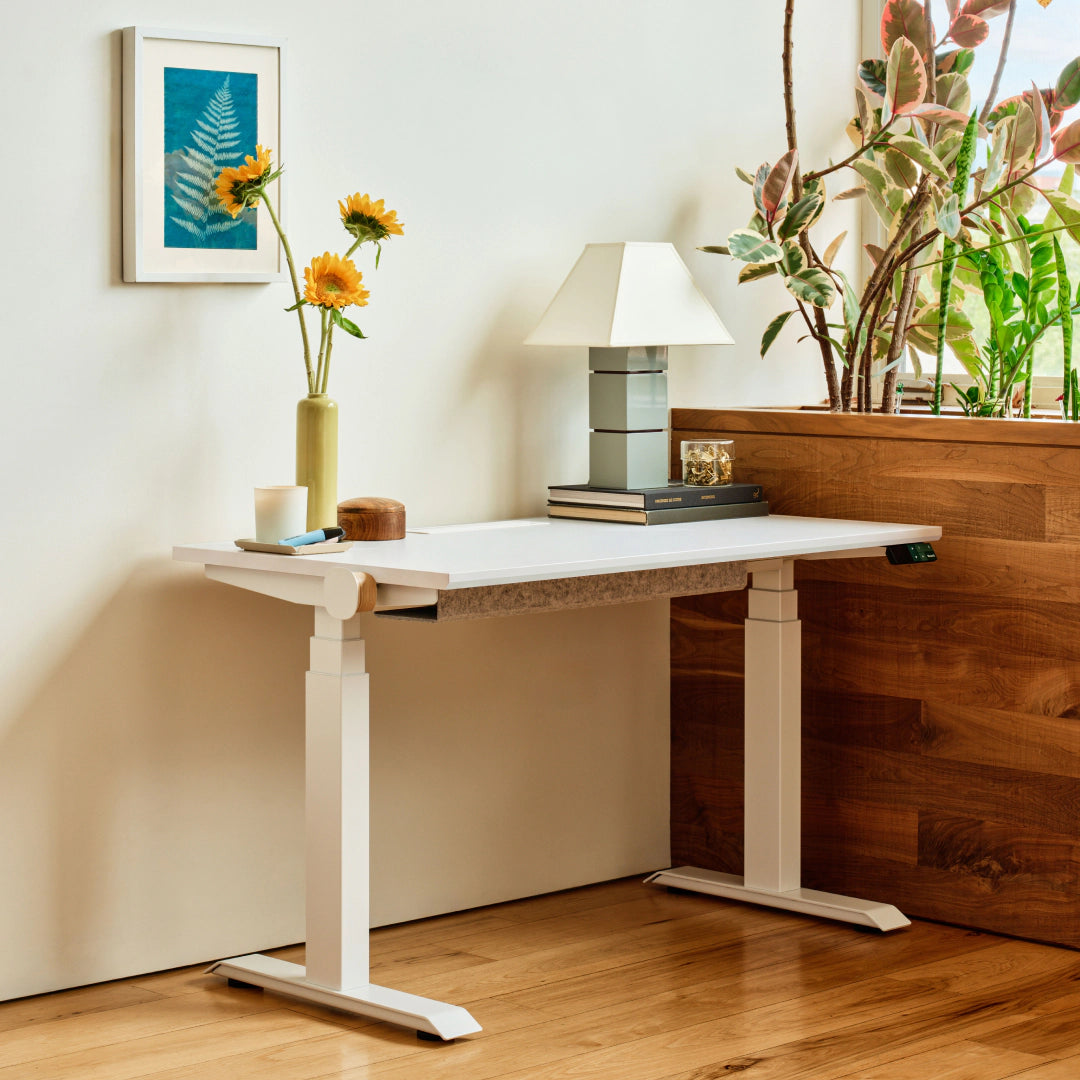
The manufacturer's square product image confirms the White top and White frame, but it does not identify which size is pictured, whether it is a photograph or rendering, or which optional accessories are installed. Use the SKU and spec sheet—not the image—to decide size. Branch's page lists a ten-year warranty; confirm current terms and delivery details directly before ordering.
Check the completed-desk height against your seated setup
Branch gives the assembled work surface a range of 25.5 to 48.9 inches from the floor. Treat that as a desktop-height range, not a bare-frame measurement. The lower endpoint is the important check for someone who needs a low seated keyboard position: account for your chair, footwear, keyboard thickness and preferred elbow angle, and do not assume a desk's fit from a person's height alone. The upper endpoint is useful for standing work, but the right position still depends on the user and the equipment on the desk.
The three-stage columns, two stored height presets, OLED handset, collision detection and sedentary reminders are listed by Branch. The built-in Bluetooth connects to Branch's Ergonomics iOS app for features such as tracking and scheduled standing sessions. The assembly/user guide explains keypad setup and app pairing; these are conveniences, not substitutes for checking clearance around a moving desk. If you do not use an iPhone or do not want an app, the desk still has handset controls, but the app-specific functions may not matter to you.
Cable management is useful, but some pieces are add-ons
The Tria includes a cable port and a felt organizer, which gives a small setup a place to route and gather leads. A cable tray and in-desk power are optional, so budget for them only if you actually want those pieces; the base selector should not be mistaken for a fully equipped power station. Plan the cord slack before raising the desk, keep cables clear of pinch points, and leave enough length for the full travel range. The manual's assembly and safety instructions deserve attention because the completed unit is heavy furniture that must be assembled and handled as directed.
Branch states a 275-pound lift capacity, but the available specification does not say whether that is a static or dynamic rating or how desktop mass is treated. I would not translate the number into a precise permissible load for a particular monitor-and-accessory stack. For a heavy workstation, confirm the basis with Branch and include the desktop and mounted equipment in that discussion. There is no independent load or stability measurement here.
Who should shortlist this version
Choose White/White when a light top and matching legs are part of the brief, one of the three measured surfaces fits the room, and a laminated-MDF desktop is acceptable. The questionnaire should favor this exact pair only when you select White/White; choosing Natural Oak/White, Black Oak/Black or another finish should send you to that corresponding configuration rather than silently substituting a look-alike. A minimum top length of 70.9 inches and depth of 29.5 inches can be met together by the largest plan; asking for 71 inches or 30 inches cannot.
Look elsewhere if the desktop must be solid wood, if your seated position requires a finished surface below 25.5 inches, or if the available actual top cannot meet your footprint constraints. Within Branch's range, the other Tria color combinations preserve the same basic lifting and cable-management feature set while changing the visual finish. A smaller Branch Duo may suit a tighter footprint, but it is a different desk with different published dimensions and features, so compare its exact configuration rather than assuming it is simply this desk in another color. For official details, review the Branch Tria product page and its linked specification and assembly materials before purchase.
Key details at a glance
| Leg count | 2 |
|---|---|
| Minimum supported desktop width | 47.2 in |
| Maximum supported desktop width | 70.9 in |
| Minimum supported desktop depth | 27 in |
| Maximum supported desktop depth | 29.5 in |
| Programmable height presets | 2 |
| Cable tray included | No |
| Published frame and mechanism warranty | 10 years |
| Frame layout | two-leg |
| Minimum working-surface height with desktop | 25.5 in |
| Maximum working-surface height with desktop | 48.9 in |
| Built-in drawer included | No |
| Built-in AC/USB power panel | No |
| Built-in AC outlets | 0 |
| Documented desktop material | laminate |
Use the exact model’s instructions for operating limits, supplied equipment and version differences.
Sources for this assessment

Choose a desk around your real setup.
Start with whether you need a complete desk or a converter for an existing fixed desk, then choose the support layout and surface package. Add exact height, top and cable constraints only when they matter.