
Your needs, this model
Does it fit your priorities?
Do you already have a fixed-height host desk, or do you need a freestanding standing desk?
This Branch product is a small converter that rests on a separate fixed-height desk. It has its own 31 × 24 in work surface, but the host desk is still required and must support the converter and your working equipment.
Explore this need in the finder →Does height adjustment need to work without a power outlet?
Yes for this model: Branch describes a spring-assisted manual mechanism, and the converter needs no mains power. This does not establish the final work-surface height from the floor.
Explore this need in the finder →What usable moving-surface size do you need?
The manufacturer sheet lists a 31 × 24 in surface. The top may be too small if a large monitor-and-equipment layout must travel together; check it against your actual devices.
Explore this need in the finder →Is a laminated-plywood surface acceptable, and which finish label should be used?
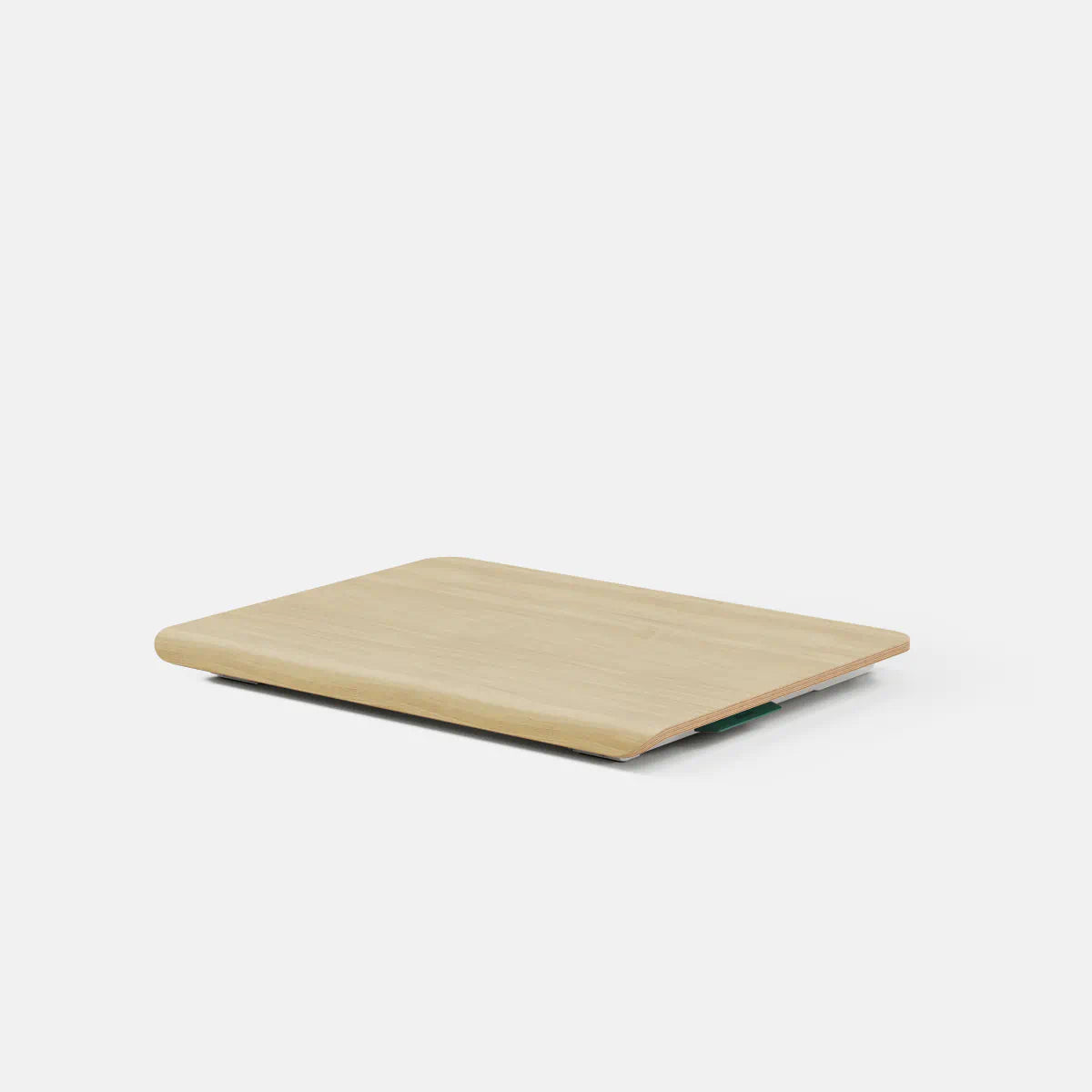
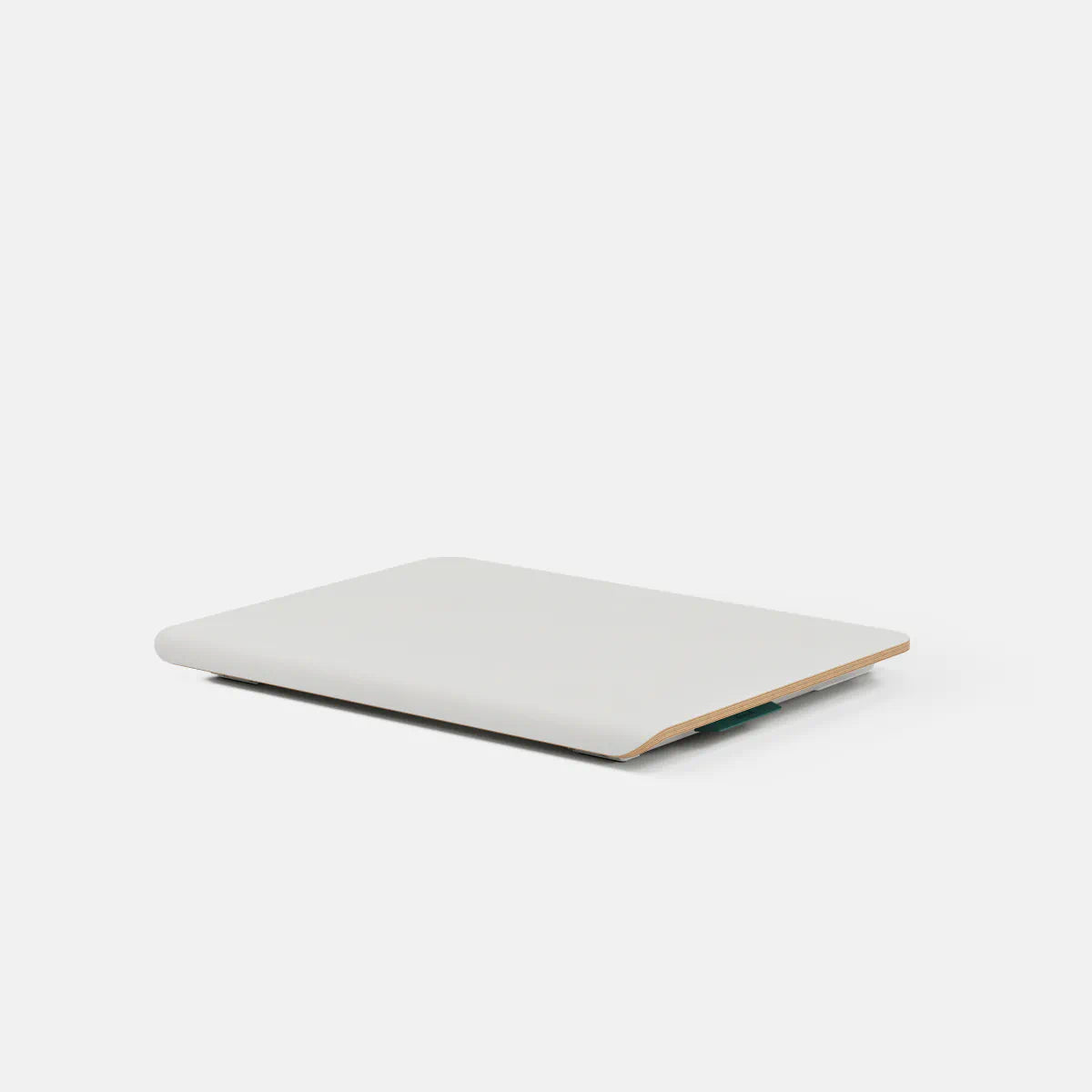
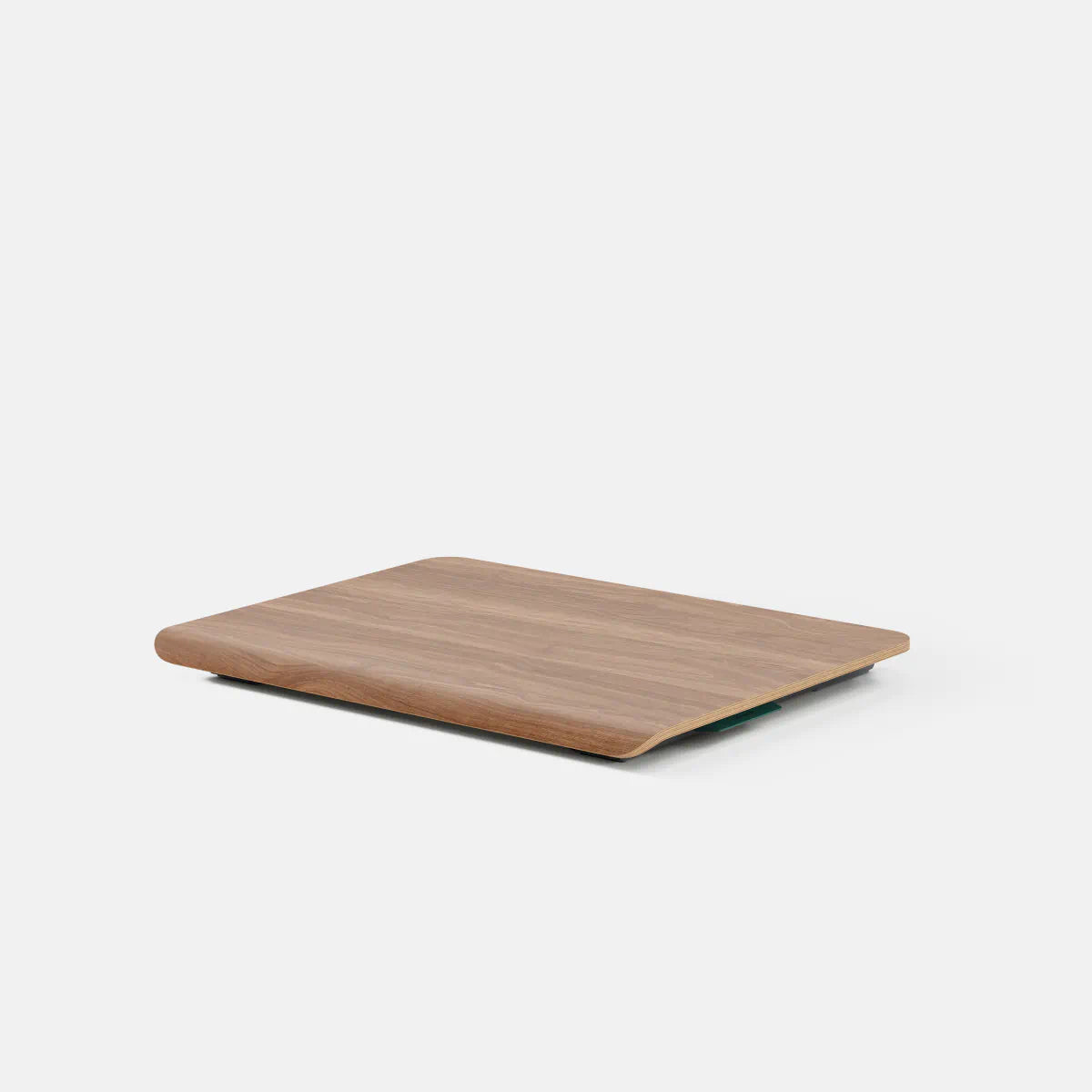
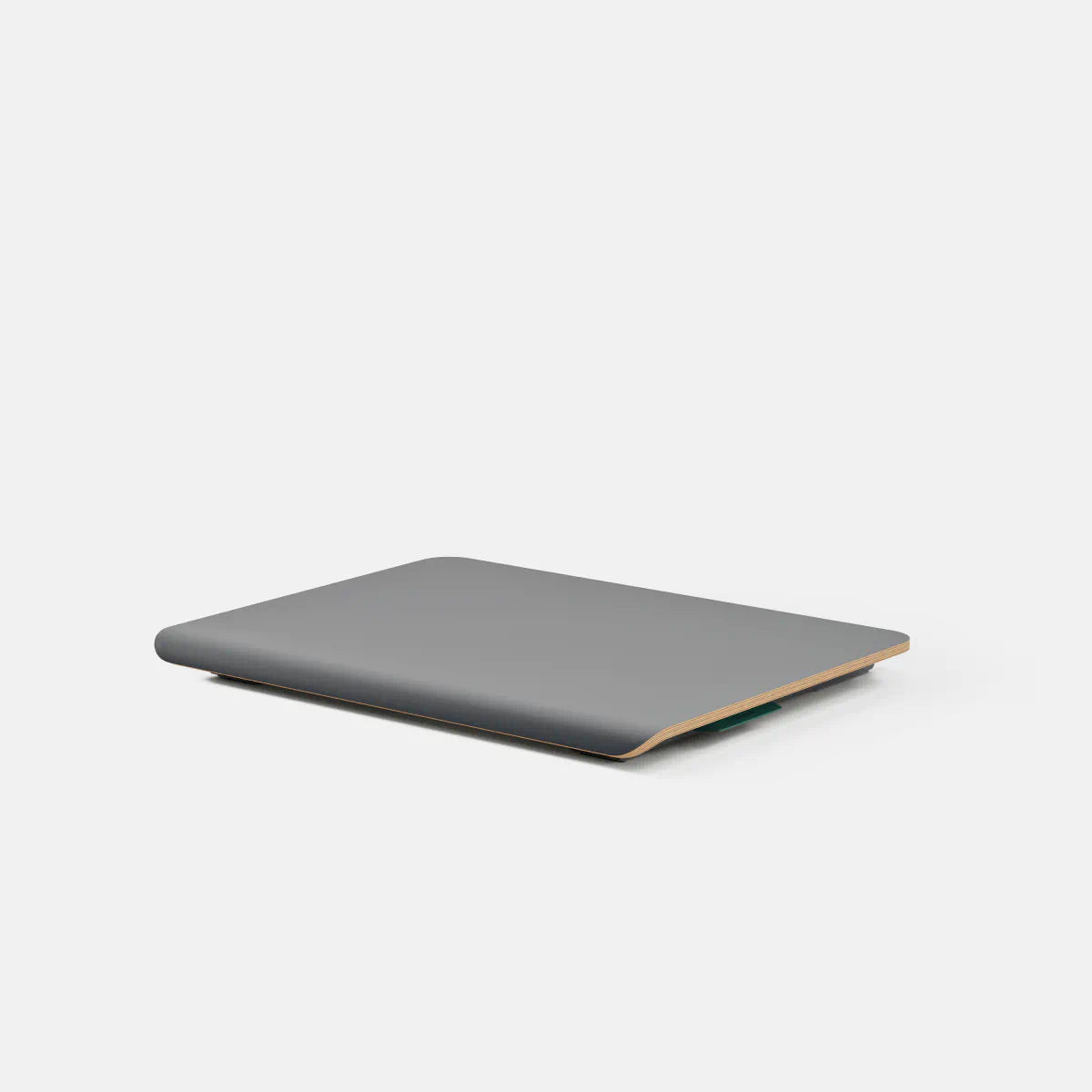
The specification identifies nine-ply laminated plywood with HPL top and bottom surfaces. The seller feed lists Woodgrain, White, Walnut and Carbon finishes; the finish names are not a hardwood or species certification.
Explore this need in the finder →Do you have a strict minimum height from the floor, or a documented static-load threshold?
Those are not established here: a host desk changes the absolute work height, and the published 26 lb capacity does not define a static rating or remaining payload after the riser's own mass. Treat either as an essential requirement only after the maker confirms the exact basis.
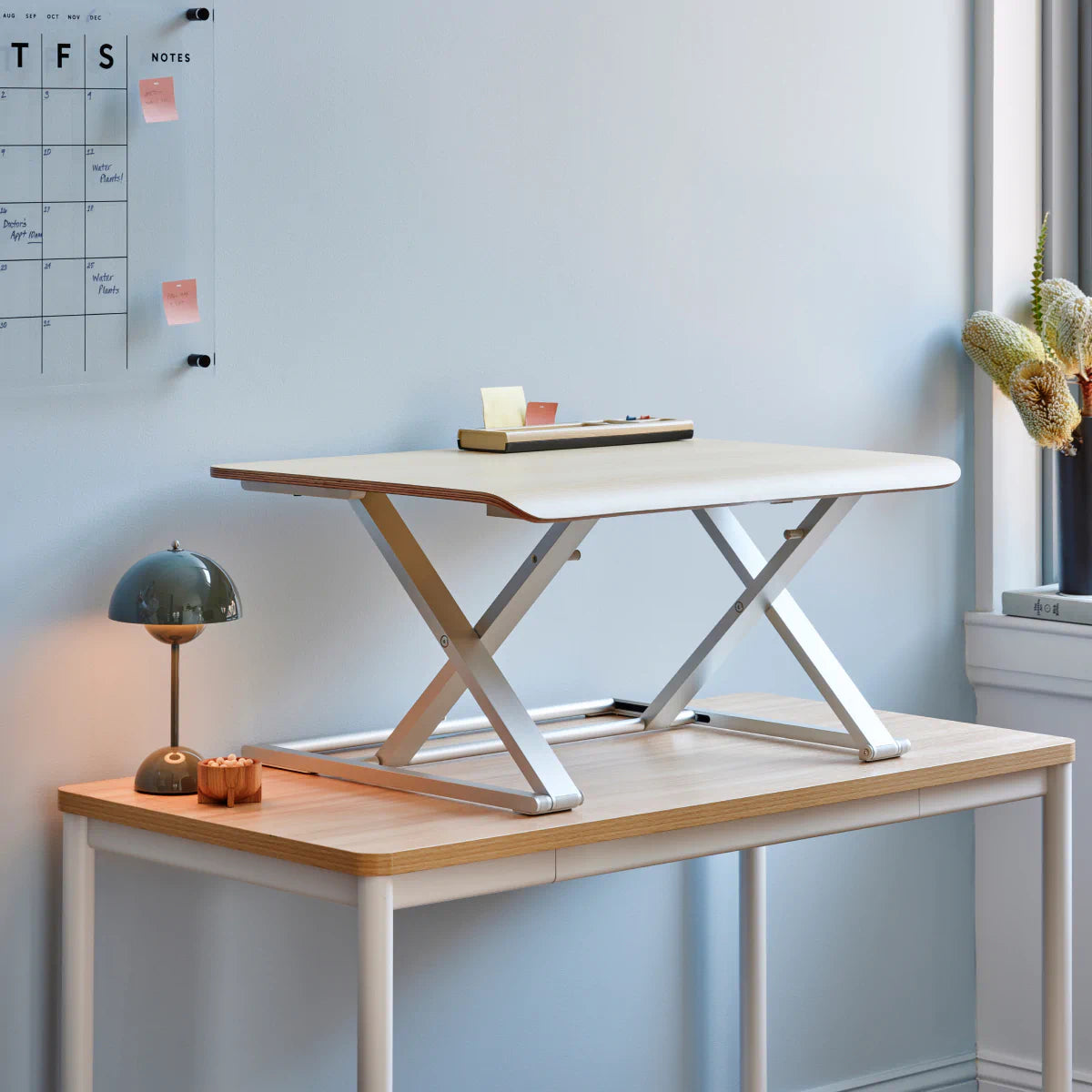
Explore this need in the finder →The Branch Desk Riser is a manual converter for an existing fixed-height desk, not a freestanding sit-stand desk. Its own work surface lifts above the host, which must have room for a 31 × 24-inch riser and support it plus the gear placed on it. Branch lists this model in Woodgrain, White, Walnut and Carbon finishes; the labels do not establish different wood species.
Start with the kind of workspace you already own
This model makes most sense when replacing a working desk is unnecessary. Branch describes a spring-assisted manual mechanism and says no assembly is required, so the riser does not need an outlet or a powered frame. It does not make a too-tall host desk shorter, and its surface still occupies desk area when lowered.
Measure the host desk’s clear top and front edge. The 31 × 24-inch dimensions describe the riser’s work surface, not a guaranteed clearance envelope for an apron, drawer, cables or wall. Check that the host top is stable and lets the riser sit flat. The converter includes its own small work platform, but not the fixed-height desk underneath it.
Measure height from the floor separately
The listed height describes the converter above its host, not the finished typing height from the floor. Branch’s linked sheet lists 2.5 inches closed and 15.8 inches extended, or 20.8 inches with the optional monitor shelf; the product page rounds the raised figure to 16 inches and separately states a 13.5-inch adjustment range. Those statements are close but not identical, so keep the distinction visible rather than treating the adjustment travel as an exact floor-to-worktop range. Add the host desk’s height to the converter’s relative position and test both seated and standing positions with your chair, feet and display.
If a hard requirement is “the lowest surface must be no higher than a specified floor measurement,” the page cannot answer it on its own. The same person may get a different absolute work height on a different host desk. A full-height electric desk with a documented floor-to-surface range may be easier to evaluate when this measurement is essential.
Small surface, modest documented load
At 31 × 24 inches, this is a compact work surface. Lay out the monitor, laptop, keyboard and other objects that must move together. Branch lists a 26-pound weight limit on the page and a 26-pound maximum capacity on the sheet, but neither source says whether that is a static or moving limit or how the converter’s own mass is counted. Do not translate the number into a certain remaining payload; ask about your equipment arrangement if a monitor arm, multiple screens or a heavy device makes the limit important.
The page gives a product weight of 22 pounds; the specification sheet says 22.5 pounds assembled. Keep both values in mind when considering frequent repositioning, and verify the host desk can support the load. The difference is small but unresolved in the manufacturer material reviewed here. The collapsed body is only 2.5 inches high according to the sheet, which may help keep the platform out of the way when lowered, but it remains a substantial object sitting on the desk.
Materials, finish options and the separate shelf
Branch’s specification describes a nine-ply laminated-plywood top with high-pressure-laminate surfaces, an aluminum base and rubber feet. That gives a clearer material answer than the finish labels: Walnut and Woodgrain are not proof of a solid hardwood surface. If solid wood is essential, this is not a match on the evidence reviewed. The four seller options—Woodgrain, White, Walnut and Carbon—are preserved as separate selectable finishes in the finder; the manufacturer images show distinct appearances, not distinct lifting specifications.
The optional Desk Riser Shelf is a separate add-on, not included in the base riser plan. The sheet lists a 20.8-inch overall height with that shelf, but its material, support limits and exact effect on the 26-pound figure are not resolved here. Do not count the shelf as part of the base package or assume that its additional height improves a monitor setup unless you confirm the exact accessory and placement with Branch. The product page lists a three-year warranty; check the current warranty terms for the seller option you choose.
Who should shortlist it—and what should they compare?
Consider the Desk Riser if a stable fixed-height desk is already available, a 31 × 24-inch moving surface is enough, and manual spring-assisted height changes without mains power suit the room. Compare the four finishes visually, but do not use their names to satisfy a material requirement. Measure the host desk and your final seated/standing heights; weigh the computer setup; and ask for clarification if a static-load threshold or precise total mass is essential.
Choose a complete adjustable desk instead if you need a larger surface, a verified floor-to-worktop minimum, a supported heavy monitor arrangement, or a self-contained work station that does not depend on another desk. A powered desktop converter may also be worth comparing if motorized changes or saved heights matter more than an unplugged mechanism. The Branch model’s practical appeal is its compact manual retrofit and small setup burden. Its limits are equally important: the host desk determines absolute height, the usable surface is modest, the maximum load basis is unclear, and the shelf is separate.
Key details at a glance
| Motor count | 0 |
|---|---|
| Minimum supported desktop width | 31 in |
| Maximum supported desktop width | 31 in |
| Minimum supported desktop depth | 24 in |
| Maximum supported desktop depth | 24 in |
| Published frame and mechanism warranty | 3 years |
| Frame layout | desktop-converter |
| Documented desktop material | laminate |
Use the exact model’s instructions for operating limits, supplied equipment and version differences.
Sources for this assessment
- Branch Desk Riser current U.S. product page
- Branch Desk Riser U.S. seller variant feed
- Branch Desk Riser product specification sheet
- Branch Desk Riser Woodgrain exact finish image
- Branch Desk Riser White exact finish image
- Branch Desk Riser Walnut exact finish image
- Branch Desk Riser Carbon exact finish image
- Branch Desk Riser Woodgrain in-use manufacturer image


Choose a desk around your real setup.
Start with whether you need a complete desk or a converter for an existing fixed desk, then choose the support layout and surface package. Add exact height, top and cable constraints only when they matter.